
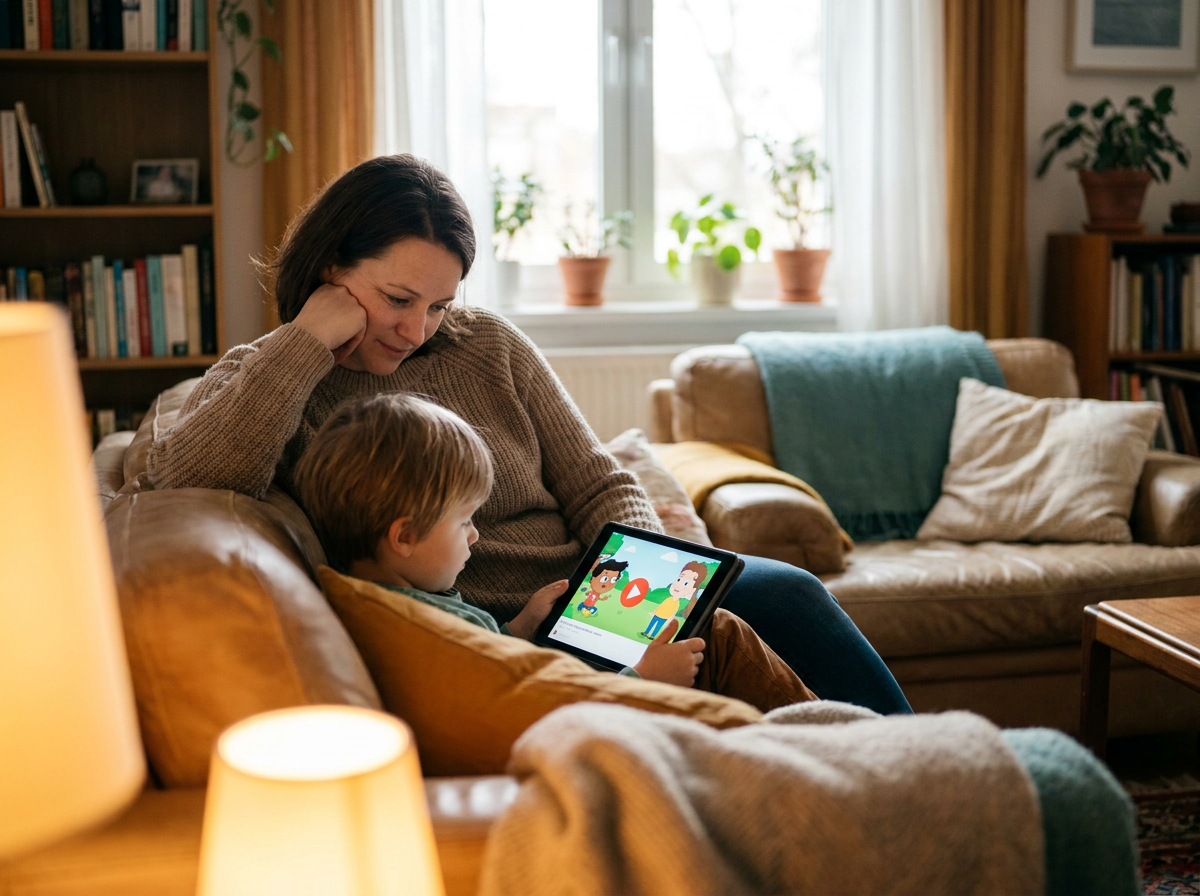
The after-school window is brutal. Your kid comes home carrying a whole day of rules, social pressure, transitions, and "hold it together" energy. You're carrying your own load. So screens become the easiest bridge. And then, without you meaning to, they become the whole evening.
Try Digital Age Parenting free — built for the exact moments that blow up after school.
After school isn't a screen-time problem. It's a decompression problem.
Why After-School Screen Time Is So Hard to Control
1) Screens become the only decompression tool. If screens are the first thing every day, your child's brain learns: "School ends, I get screens." Anything that delays screens feels like a threat.
2) Screens delay the things that make evenings easier. Kids skip snack, water, movement, and connection. Then you're trying to end screens with a kid who is hungry, thirsty, and emotionally maxed out.
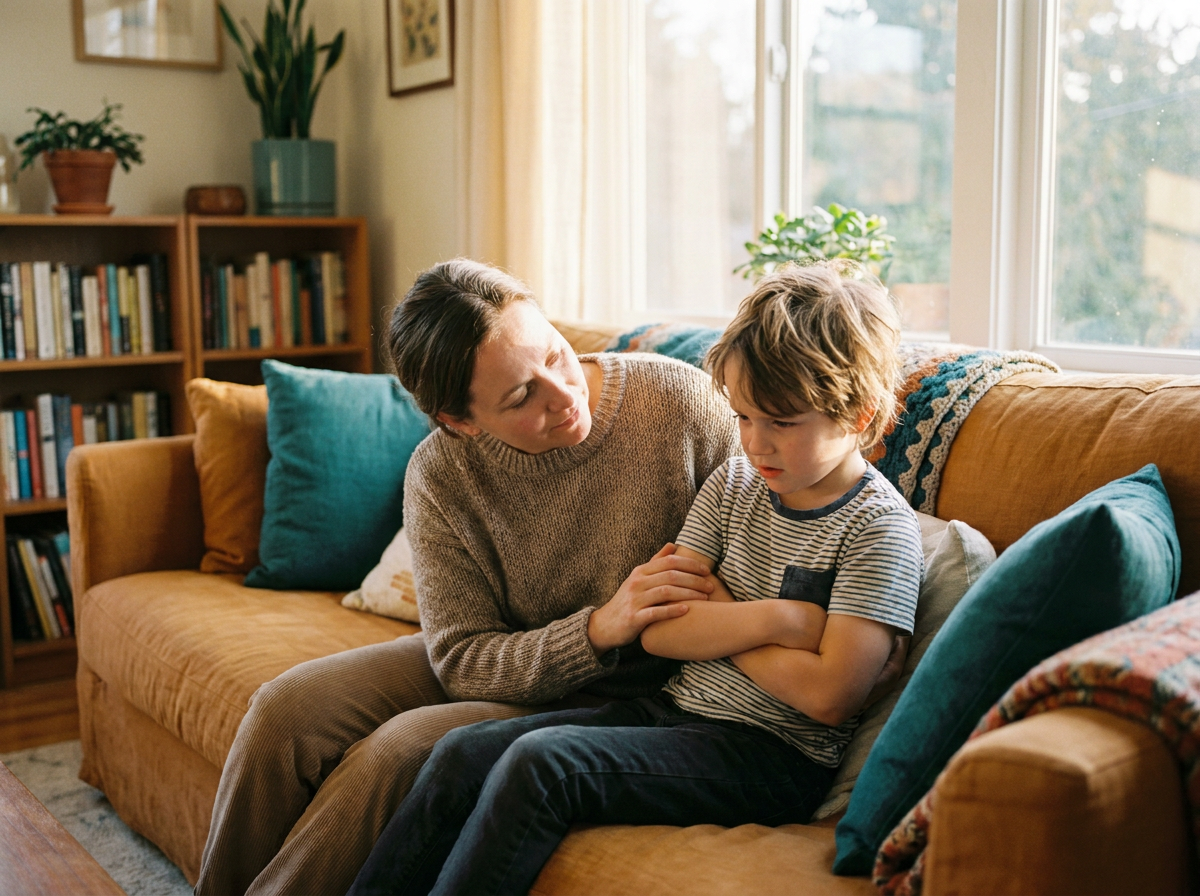
3) The "screen-off crash" hits right when you need cooperation. Stopping screens can trigger irritability, arguing, tears, and shutdown. That's not a character flaw. It's a nervous system crash.
Signs After-School Screens Are Taking Over
- Your child asks for screens the second they walk in
- Homework becomes a fight (or never happens)
- Dinner is delayed because "just one more"
- Meltdowns happen when screens end
- Your child seems crankier after screens
- Bedtime gets later and harder
If you're nodding, the fix isn't "be stricter." It's: build a better after-school sequence.
The After-School Routine That Works
Snack → Move → Connect → Screens
Step 1: Snack + Water First (5–10 min)
Before anything else, feed the crash. Protein + carb (cheese + crackers, yogurt + granola, peanut butter toast). Water bottle on the counter.
This one step prevents a shocking number of screen-time tantrums.
Step 2: Movement Reset (5–15 min)
You're not trying to tire them out. You're helping their body switch gears. Options: outside for 10 minutes, trampoline, scooter ride, "carry the groceries in," or "animal walks" to the bedroom.
Step 3: Connection Micro-Moment (60 sec)
This is the secret sauce. Connection reduces craving. Try: "High/low of your day?" "Tell me one thing that was hard." "Want a joke or a hug?" Or one connection question from the app.
You're not doing a therapy session. You're giving their brain a "safe landing."
Step 4: The Screen Window (20–40 min)
Now screens aren't the enemy. They're a planned block. Set a start time, end time, use a visible timer, and end with the same ritual every day.
Older kids might get 45–60 minutes. Younger kids 15–30 minutes. The key: it ends cleanly.
The 3-Step Transition Ritual (End Screens Without War)
1. Warning: "5 minutes left. Pick your last video."
2. End phrase (same every day): "Timer says done. Screens are off. You can be mad. I'm here."
3. Next thing ready (no dead space): "Homework first or shower first?" "Help with dinner or do a 10-minute activity?" "Outside for 5 minutes or LEGO?"
Dead space is where kids spiral back to "can I have more?"
If Your Child Melts Down Anyway
You don't need a better speech. You need a calmer loop.
Offer a regulation choice: hug or space, stomp 10 times or squeeze a pillow, snack or water. (Yes, snack again. After school is a hunger minefield.)
Common Worry: "If I Don't Give Screens Right Away, They'll Explode"
They might, at first. Because you're changing a pattern. But most families see improvement within 7–14 days when screens become predictable, the body gets a reset, the nervous system gets connection, and stopping becomes consistent.
Consistency beats intensity.
A Sample After-School Schedule
- 3:30 — Arrive home
- 3:30–3:40 — Snack + water
- 3:40–3:55 — Movement reset
- 3:55–3:56 — Connection micro-moment
- 3:56–4:30 — Screen window (timer)
- 4:30–4:45 — Homework / chore / play
Want a "no screens before school" companion routine? Read: Screens Before School: Why It Backfires.
The Big Takeaway
After-school screen time becomes a problem when it's doing too many jobs: calming, entertaining, replacing connection, filling boredom, delaying transitions.
Give your child what their brain actually needs first — snack, movement, connection — then screens become easier to limit.
Most apps control screens. We rebuild connection.
Ready to Make After-School Easier?
Scripts for transitions, connection questions, screen-free activities, and age-based guidance for kids 2 to 12.
Try Digital Age Parenting FreeKeep Reading

Enjoyed this article?
Get practical, research-backed parenting tips delivered to your inbox. No spam, just articles worth reading.
We respect your privacy. Unsubscribe anytime.