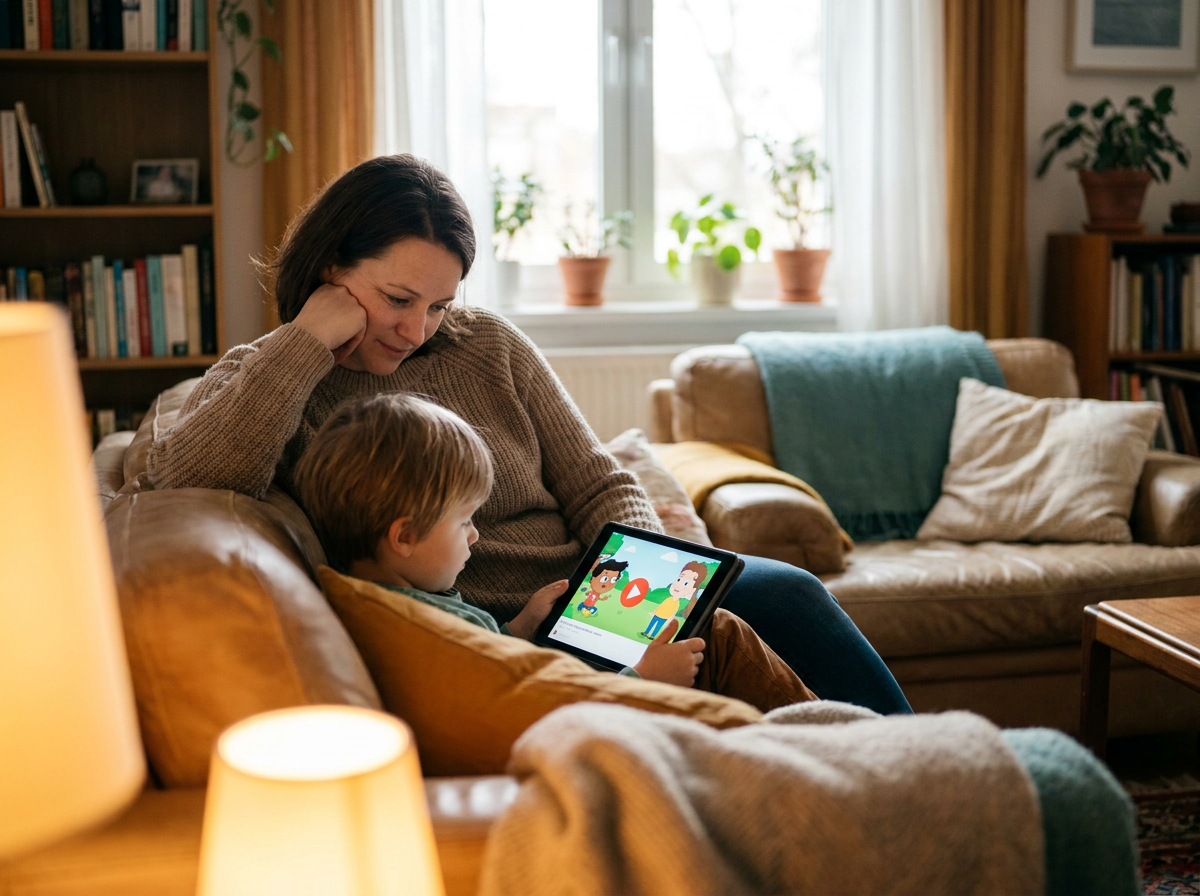
Your kid is fine. Then YouTube starts. They get locked in. When it's time to stop, it's a meltdown. Afterward they're cranky, edgy, or completely checked out. Sound familiar?
And you're left thinking: “Is this melting their brain?”
Let's take the panic down a notch but also take your instincts seriously. Because for many kids, YouTube (especially short, fast, autoplay content) is uniquely hard to regulate.
Want scripts and screen-free replacements ready to go? Try Digital Age Parenting free
Why YouTube Kids Can Feel More Intense Than Other Screen Time
This isn't about you being “too strict.” It's about how the platform works.
1. Autoplay removes stopping points
Traditional TV has natural breaks. YouTube is designed to keep going. No pause. No credits. No “episode ended.” Your child’s brain doesn’t get a clean moment to transition.
2. Fast-cut, high-stimulation content
Quick scene changes, loud sound effects, bright visuals, constant novelty. That level of stimulation can make real life feel boring afterward and make stopping feel like a crash.
3. The algorithm pulls kids toward “more”
Even in YouTube Kids, recommendations can drift toward content that’s more addictive than enriching. Parents think they’re choosing “one video,” but the system is choosing the next 20.
4. Kids don’t just watch, they hunt
Searching, clicking, scrolling, and choosing the next video can be more activating than passively watching a show. That’s a lot of dopamine hits for a little nervous system.
Signs YouTube Kids Is Too Stimulating for Your Child
You don't need all of these for it to be worth adjusting.
Bigger tantrums when it’s time to stop
More irritability or aggression after watching
“Zombie mode” (hard to get their attention)
Sleep gets worse (especially late-day viewing)
They stop wanting other play
They constantly ask for it or sneak it
If you're seeing this, it doesn't mean your child is broken. It means the input is too intense.
The problem isn't your child. It's that YouTube is designed to be irresistible, and no one gave you a playbook.
The 5-Part YouTube Plan (Without Banning Everything)
Try this for 7 to 14 days. The goal is fewer battles and a calmer kid, not perfection.
Move YouTube to “planned,” not “on demand”
This one change reduces 80% of the chaos. Pick a predictable time: after school snack time, while you cook dinner (with a timer), or a weekend window.
Script: “YouTube is a planned activity, not an anytime activity. We do it at ___.”
Create a hard stop with a timer + a transition
Stopping is the hardest part. Set a visible timer, give a 5-minute warning, and have the next activity ready. Good “next things”: outside for 5 minutes, snack + water, a quick game with you, or a screen-free activity menu.
Script: “When the timer ends, YouTube is done. Then we’re doing ___.”
Curate the input (don’t let the algorithm parent)
Turn off autoplay where possible. Use a short, parent-approved playlist. Stick to longer-form videos. Choose calmer channels and avoid “surprise egg / hyper compilation” style content. Rule of thumb: fewer cuts, fewer sound effects, fewer hooks.
Use co-viewing once a day (even 2 minutes)
Sit for the first 60 seconds. Ask one question. Then step away. This turns YouTube from a solo dopamine tunnel into a shared moment.
Script: “Show me what you’re watching. What’s the funniest part?”
Replace YouTube with a menu
Kids don’t stop a powerful habit because you explained it well. They stop because there’s something else that works. Build: LEGO, magnet tiles, fort. Move: dance party, animal walks, obstacle course. Create: drawing challenge, sticker scenes, paper airplanes. Connect: jokes, one connection question, 10-minute board game.
When Your Child Melts Down Anyway
You're not trying to win an argument. You're trying to hold a boundary and keep connection.
Step 1: “You’re mad. Stopping is hard. YouTube is still done. I’m here.”
Step 2: “Hug or space?”
Step 3: “Stomp 10 times or squeeze a pillow?”
Step 4: “Snack or water?”
Yes, it feels repetitive. Repetition is what makes it work.
If You're Thinking, “My Kid Is Addicted to YouTube”
Sometimes it's not addiction. It's that YouTube has become their main boredom solution, their main calm-down tool, and their main way to decompress. That's fixable. Start by changing the pattern, not shaming the child.
For a deeper read on this, see: Is My Kid Addicted to Screens? Signs to Look For
Want This to Feel Easier in the Moment?
Scripts for the moment the screen turns off, connection questions that make kids feel seen, and screen-free activity ideas so YouTube isn't the only option.
Most apps control screens. We rebuild connection.
Try Digital Age Parenting FreeKeep Reading

Enjoyed this article?
Get practical, research-backed parenting tips delivered to your inbox. No spam, just articles worth reading.
We respect your privacy. Unsubscribe anytime.