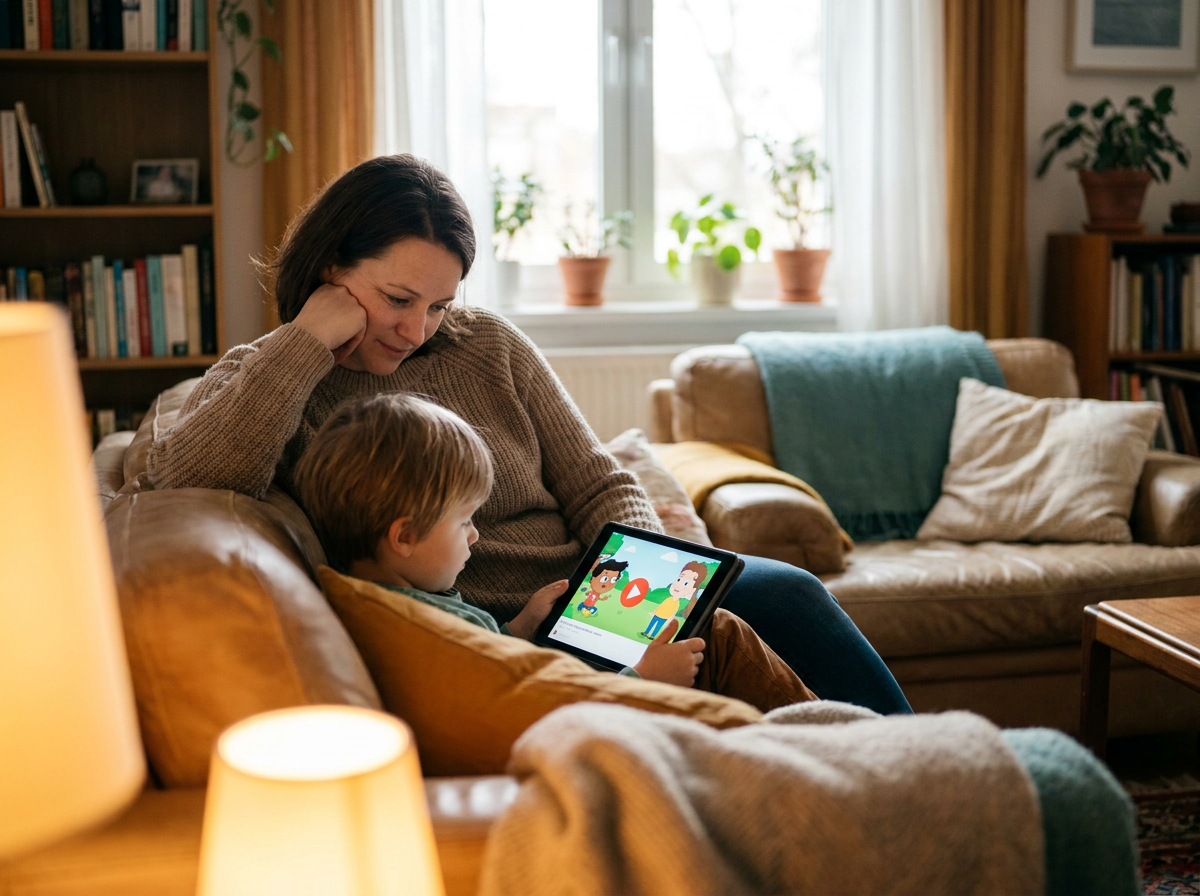
If screens before school make your mornings worse, you’re not imagining it
A lot of families start with the same logic:
- “It keeps them calm while I get ready.”
- “It’s the only way I can pack lunches.”
- “It’s just 15 minutes.”
And then it happens.
The timer goes off. The screen turns off. And your child suddenly acts like you’ve stolen their soul.
If that’s your morning, you’re not a bad parent. You’re dealing with a pattern that almost always backfires because of how kids’ brains handle transitions and stimulation.
Want scripts for transitions and pushback? Try Digital Age Parenting free
Why screens before school backfire (even when it’s “just a little”)
Morning screens are different from after-school screens. Not morally. Biologically.
1) Screens hijack the “launch” of the day
Your child’s brain is waking up and calibrating. Fast, high-reward input (videos, games, scrolling) sets the tone: “This is what my brain wants.”
Then you ask them to do the opposite: get dressed, eat, brush teeth, put on shoes, and transition out the door.
That’s a huge drop in stimulation and kids feel that drop as frustration.
2) Autoplay removes stopping points
Most morning screen time isn’t one episode with credits. It’s autoplay, “just one more,” constant novelty. So when you stop it, you’re not ending a show. You’re interrupting a dopamine conveyor belt.
3) It makes time feel invisible
Screens compress time. Kids don’t feel the minutes passing. So when you say “We have to leave now,” it feels sudden and unfair, even if you warned them.
4) It steals the connection buffer that makes transitions easier
The easiest mornings usually have a tiny bit of connection: a joke, a 30-second cuddle, a silly race to the bathroom, or a quick “today’s plan” chat. Screens replace that buffer. Without it, kids resist more.
Signs morning screens are hurting your mornings
- bigger meltdowns when it’s time to stop
- slower getting dressed (more stalling)
- more arguing, whining, or “can’t you just…”
- more forgetfulness (shoes, backpack, lunch)
- more emotional intensity before you even leave the house
The goal: a screen-free “launchpad” (not a perfect morning)
You don’t need a 90-minute Pinterest routine. You need a simple structure that gives your child predictable steps, gives you enough space to function, and reduces the daily screen-off explosion.
The Morning Launchpad Routine (20 to 30 minutes, screen-free)
Step 1: Body wake-up (2 to 5 minutes)
Pick one: 10 jumping jacks, animal walks to the bathroom, a quick stretch, or dance to one song. This helps kids regulate and reduces the need for stimulation from a screen.
Step 2: Connection micro-moment (60 seconds)
Pick one: ‘Tell me one thing you’re looking forward to today.’ ‘What’s your brave move today?’ a joke ritual, a 10-second hug. Connection makes compliance easier. It’s fuel.
Step 3: The 3 Must-Dos checklist
Keep it short. Kids can hold three steps. Example: 1) get dressed 2) eat breakfast 3) teeth + shoes. Put it on a sticky note or a small whiteboard.
Step 4: Build in a choice
Choices reduce power struggles. Try: ‘Cereal or eggs?’ ‘Get dressed before breakfast or after?’ ‘Race to shoes or hop like a bunny?’
Step 5: If you need a parent breathing room block, use audio (not video)
If you rely on screens so you can pack lunches or get ready, swap to an audiobook, kids podcast, or calm music. Audio gives you space without the high-stimulation trance and it’s easier to turn off.
What to say when your child asks for screens in the morning
Script: “Screens are for later. Mornings are for getting ready. You can pick music or a podcast.”
If they push: “I know you want it. It’s still a no. I’ll help you get started.”
How to transition off morning screens (without a week of chaos)
Days 1 to 2: Move screens to after the 3 Must-Dos
If you’re not ready to go screen-free yet, start here: ‘Screens happen after you’re dressed, fed, and teeth are done.’
Days 3 to 5: Replace video with audio
Same time block, lower stimulation.
Days 6 to 7: Make mornings screen-free
Keep the routine. Keep the script. Expect some protest and stay boringly consistent.
What if your child melts down anyway? (the calm boundary)
Script: “You’re mad. Screens are still for later. I’m here. We’re getting dressed now.”
Then offer a regulation choice: hug or space, stomp 10 times or squeeze a pillow, “Do you want help with your shirt or do it yourself?”
The big takeaway
If screens before school are making mornings harder, it’s not because you’re doing something wrong. It’s because screens are high-reward, high-stimulation input and mornings require transitions, patience, and cooperation.
A simple screen-free launchpad (body, connection, 3 must-dos, and one choice) can change the entire tone of your day.
Want help with the exact words to say in the hard moments?
Quick scripts for transitions and pushback, connection questions that get kids talking, and screen-free activity ideas that actually work.
Try Digital Age Parenting FreeMost apps control screens. We rebuild connection.
Keep Reading


Enjoyed this article?
Get practical, research-backed parenting tips delivered to your inbox. No spam, just articles worth reading.
We respect your privacy. Unsubscribe anytime.