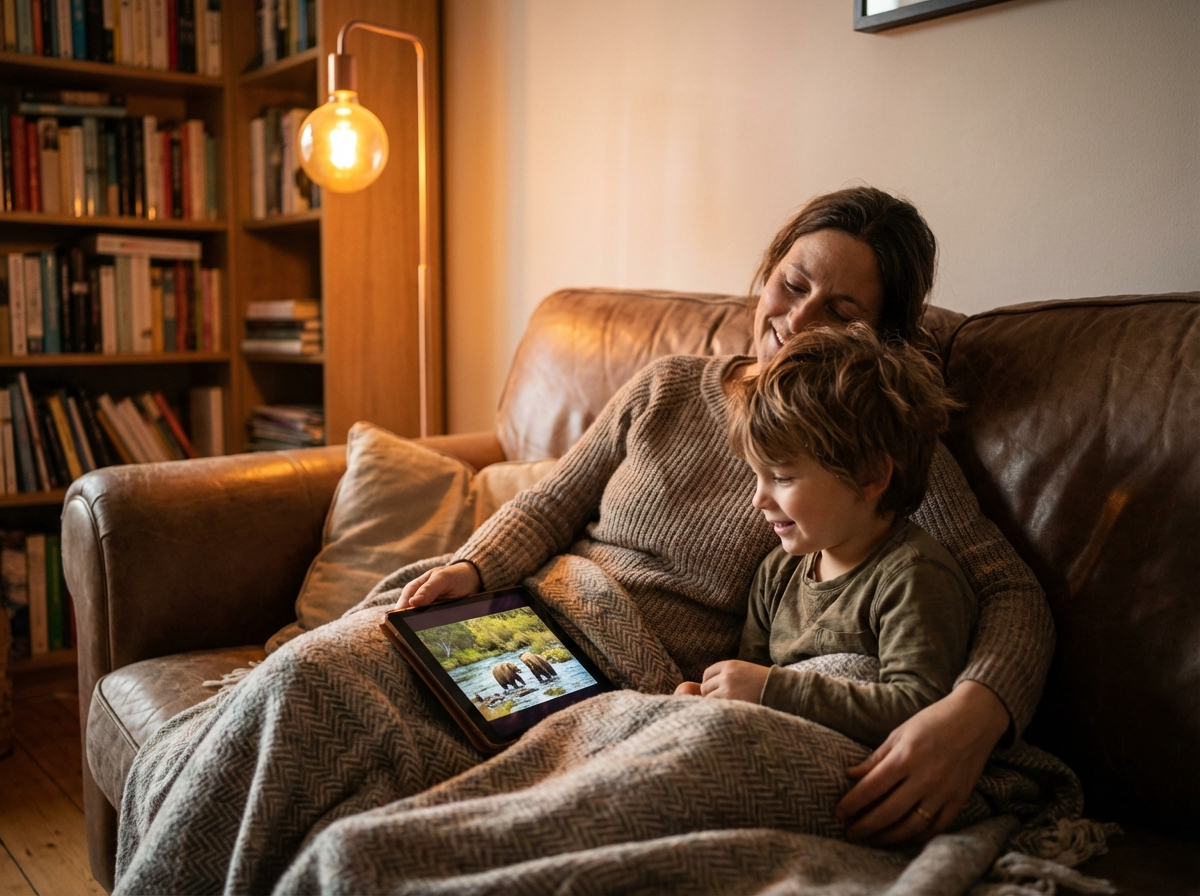
A slow nature show is a very different experience than 45 minutes of fast-cut social media clips. Same time. Completely different impact.
Try Digital Age Parenting free for age-based lessons and guidance.
AAP Screen Time Guidelines
Under 18 months: no screens (video calls OK). Ages 2-5: up to 1 hour of high-quality content. Ages 6+: consistent limits on time and content type. The AAP is not just counting minutes. They are asking what kind of content.
Why Content Type Matters
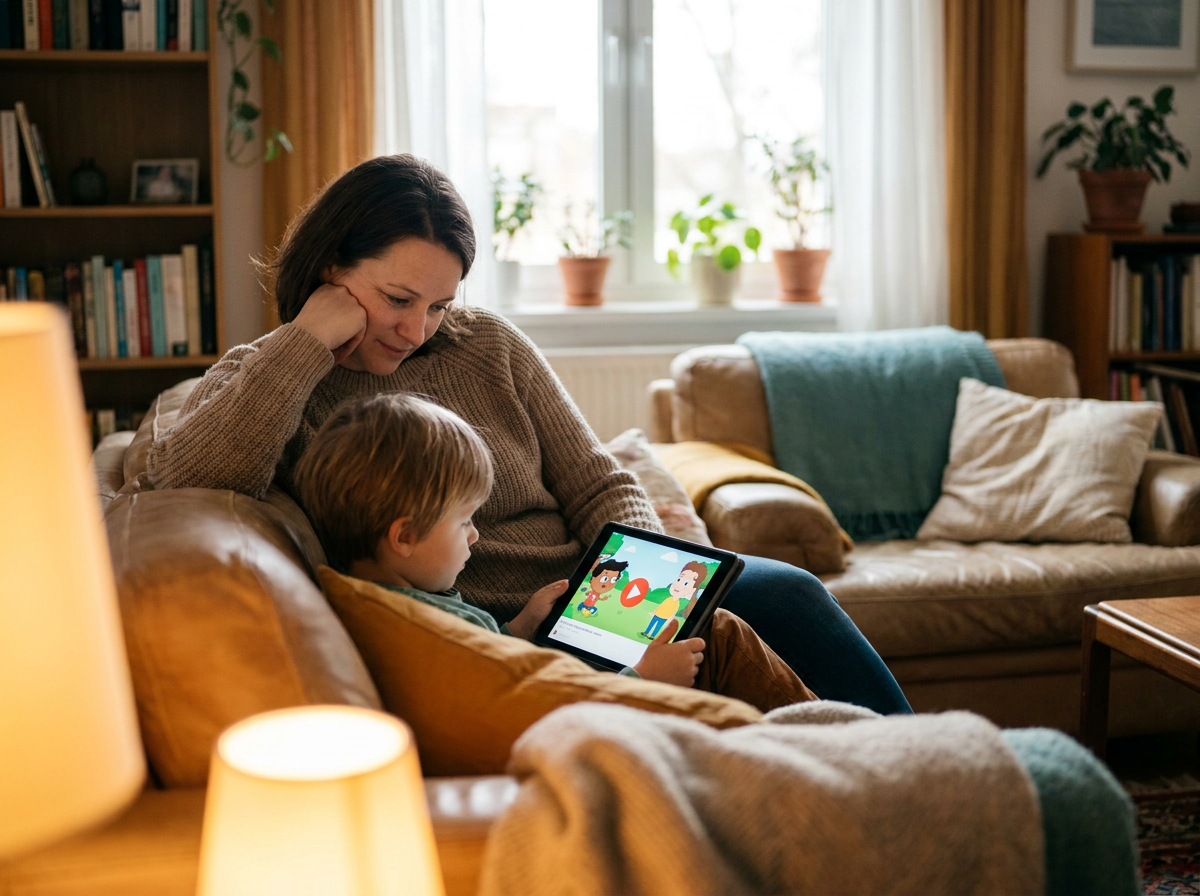
Fast-paced clips overload attention. Calm, predictable content leaves room for learning and connection. Educational screen time is about whether the pace and structure support how your child's brain works.
Content Guide by Age
Ages 2-3: Slow-paced, repetitive shows (Bluey, Sesame Street). Short episodes.
Ages 4-6: Narrative-based content with story arcs. Co-view and discuss.
Ages 7-10: Introduce documentaries. Use shows as conversation starters.
Ages 11-12: Start digital literacy conversations about why content is designed to keep them watching.
Co-Viewing Changes Everything
When you watch together, asking questions and reacting, you transform screen time into a connection moment. Research shows co-viewing dramatically improves language development.
The real goal is not zero screens. It is intentional screens.
You Do Not Have to Figure This Out Alone
Age-appropriate lessons, conversation starters, and offline activities.
Try Digital Age Parenting FreeKeep Reading

Enjoyed this article?
Get practical, research-backed parenting tips delivered to your inbox. No spam, just articles worth reading.
We respect your privacy. Unsubscribe anytime.